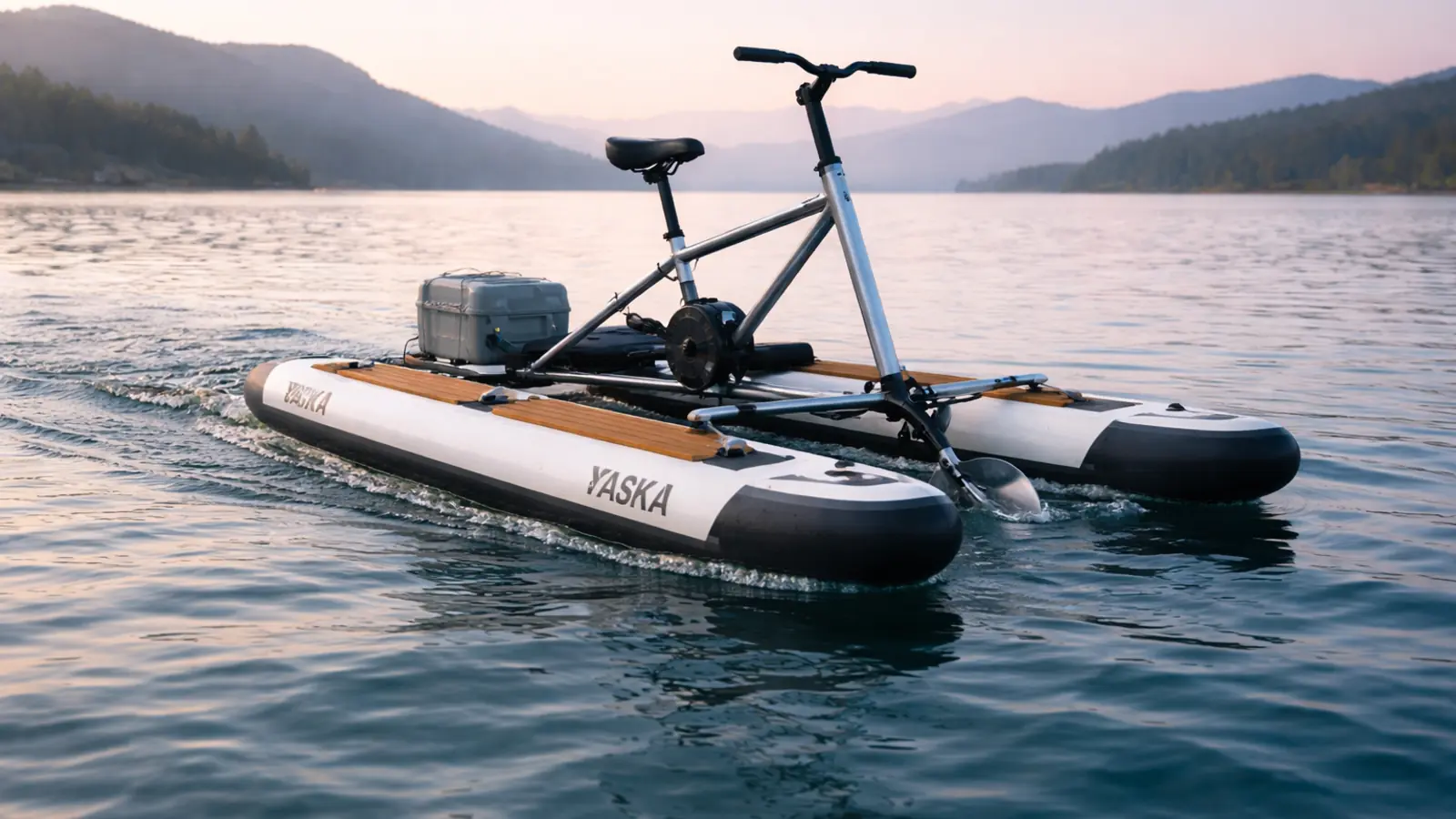
Waterbikes are one of the most exciting trend products on the water in 2026: they combine the ride feel of a bicycle with the fun of a pedalo – only far sportier. This guide explains the different designs, who a waterbike is actually worth it for and what to look out for when you buy.
The two basic designs
Inflatable waterbikes
Inflatable models use two drop-stitch floats and a removable frame. The advantages:
- Space-saving transport – fits in any boot
- Low weight (20–30 kg)
- Easy to store over winter
- Affordable entry-level pricing
Downsides: slightly less propulsion than aluminium-framed models, and 10–15 minutes to set up.
Aluminium-frame waterbikes
Fully rigid waterbikes with an aluminium frame and solid floats are the higher-performance option. The advantages:
- Higher top speeds
- More direct ride feel, much like a bicycle
- Ready to go in seconds
Downsides: heavier (30–45 kg), needs storage space, higher price tag.
Who is a waterbike actually for?
A waterbike is worth considering if you:
- Regularly use a lake, river or coastal stretch
- Are looking for an active workout on the water (an alternative to rowing or SUP)
- Want to add a real wow factor for family and friends
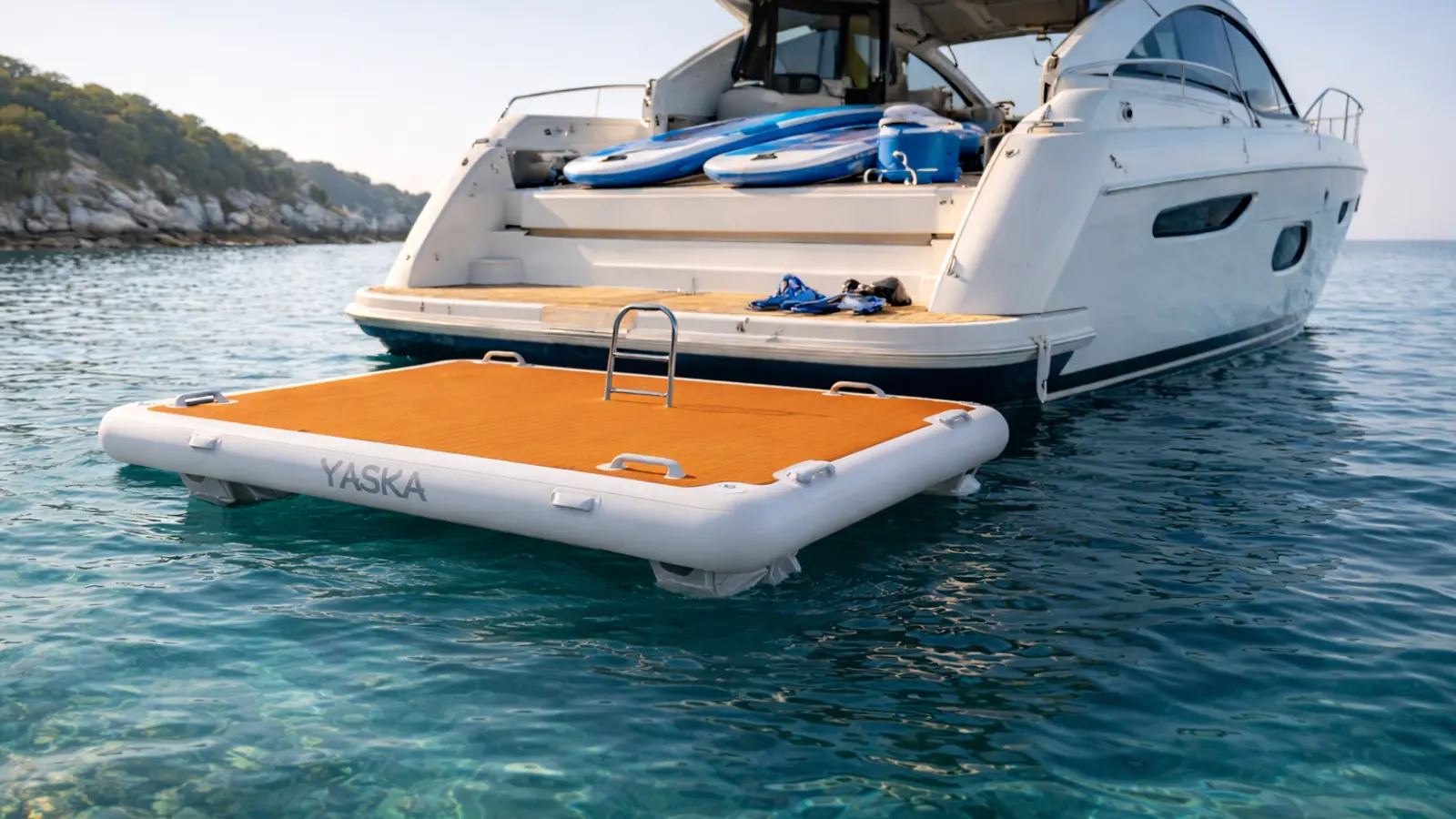
- Want to entertain guests on your boat – a waterbike trailing behind the yacht is a genuine head-turner
As pure transport (longer distances), a SUP or kayak is usually more practical. A waterbike is all about the riding fun and the workout.
Technical details worth checking
- Float volume: At least 150 litres per pontoon for adults.
- Propeller or paddle-wheel drive: Propellers are more efficient; paddle wheels are cheaper and easier to maintain.
- Load capacity: Rider weight plus a 20 kg buffer for gear.
- Aluminium or stainless steel frame: Crucial for corrosion resistance in salt water.
- Removable saddle and handlebars: Makes transport and cleaning easier.
Price brackets for 2026
- Entry level (inflatable): €1,500–2,500
- Mid range (inflatable/aluminium hybrid): €2,500–4,000
- Premium (full aluminium frame): €4,000–7,000
Yaska offers models across every segment – with long-term spare parts support, which is a genuine quality marker for this kind of product. Have a look at our waterbike category for the current line-up.
So, is it worth it?
A waterbike isn't a substitute for a SUP or kayak – it is a discipline in its own right with its own appeal. If you are after sporty riding fun and have regular access to the water, you will be richly rewarded. For newcomers we recommend a mid-range inflatable model – the price-to-performance ratio is strong and the risk of getting in is low.