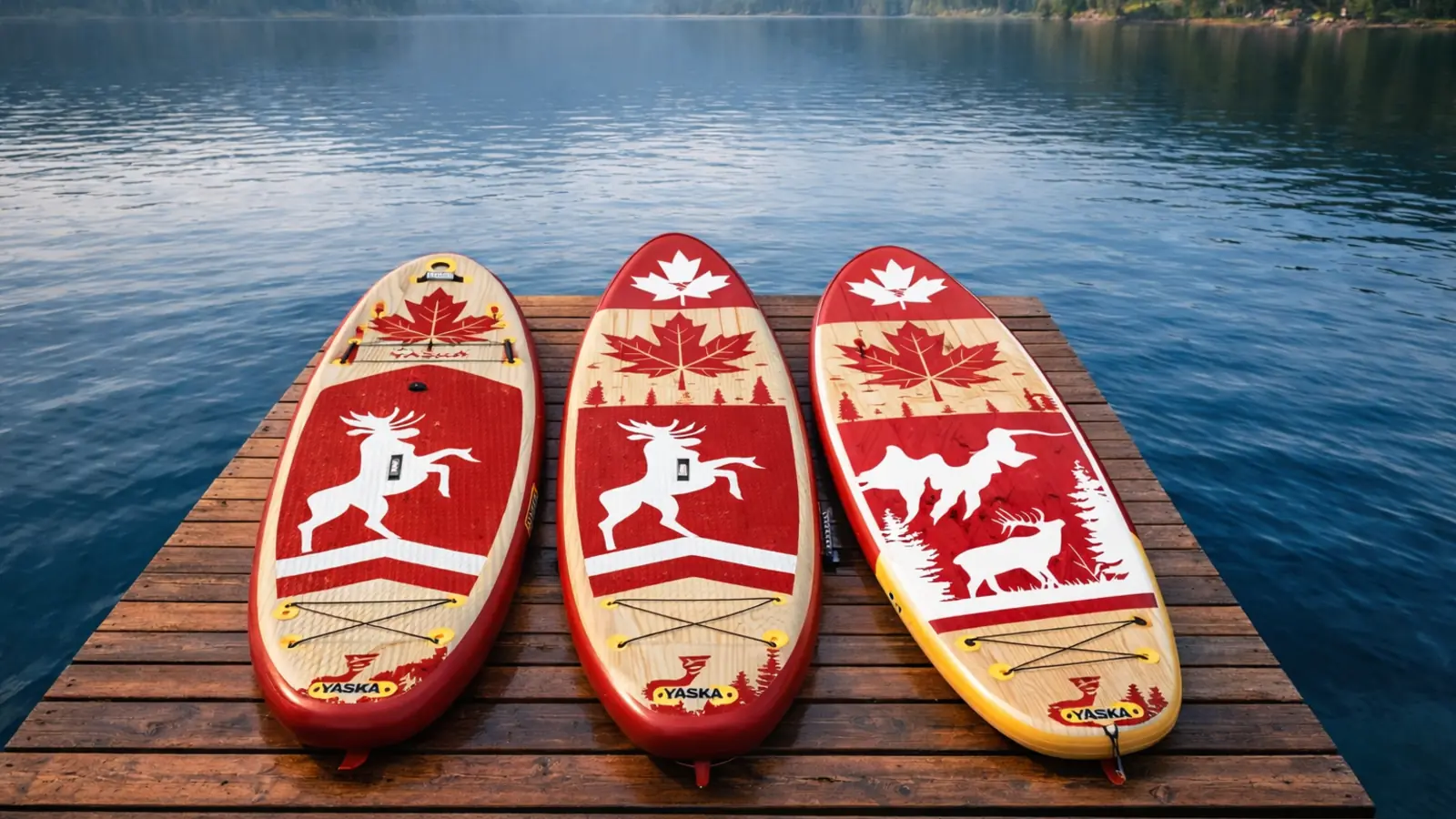
Stand-up paddleboarding is booming – and the choice of boards grows every year. To stop you getting lost between all-round, touring, race and yoga boards, this buyer's guide pulls together what really matters: which board type suits which paddler, how important load capacity really is, and what to look out for when you buy.
The four common SUP types at a glance
All-round SUP
All-round boards are the go-to choice for beginners and occasional paddlers. They are wide (typically 32–34 inches), stable and forgiving of rookie mistakes. If you paddle on the lake now and then, want family fun, or plan to take the dog or the kids along, this is the right category.
Touring SUP
Touring boards are longer and narrower (30–31 inches) with a pointed nose. They track better and cover longer distances with less effort. Ideal for committed leisure paddlers and anyone who wants to rack up the miles.
Race SUP
Race boards are narrow (25–27 inches), extremely fast and track like a dart – but they are tippy. They are aimed at experienced paddlers and competitors. Not suitable as a first board.
Yoga & fitness SUP
Yoga boards are extra wide (34–36 inches) and feature a large, non-slip deck pad. They are the most stable SUP variant and are perfect for yoga, fitness workouts or relaxed paddling with maximum security.
Load capacity: the most important number
A SUP's load capacity should cover your body weight plus at least 20–30 kg of headroom for kit. A handy rule of thumb:
- Up to 80 kg paddler weight: board with 110–120 kg capacity
- 80–100 kg paddler weight: board with 130–150 kg capacity
- Over 100 kg or with a passenger (child/dog): 160 kg+ capacity
An undersized board sits too deep in the water, loses its glide and becomes unstable. When in doubt, size up.
Inflatable or hard board?
For 95% of leisure paddlers, an inflatable SUP is the right call: it fits in a rucksack, slides into any boot, is tough and – in real-world use – barely distinguishable from a hard board. Hard boards only really pay off for serious racing or surfing.
What to look for when you buy
- Double-layer construction: Delivers stiffness and longevity.
- A quality pump: A double-action pump saves time and effort.
- Carbon or fibreglass paddle: Noticeably lighter than aluminium.
- After-sales commitment: Replacement fins, valves and repair kits should remain available long term.
Our advice for first-time buyers
If you are buying your first SUP, an all-round board in the right size will almost always be the right pick. What matters is realistic load planning, solid construction and a supplier who is still reachable after the sale. It is well worth a look at our Yaska SUP boards – every model comes with long-term spare parts support.